Pages

Monday, 15 June 2015

YOU CAN NOT DELETE YOUR HISTORY BUT YOU CAN LET IT GO


So many times I meet friends and hear amazing stories of the past. One day I met an old man and he was telling us the life story of a colleague they went to school with who went on to become a very successful politician. He said ‘my son life is an amazing journey full of surprises. Do you know…..? Believe me or not, we went to school together. He was dumb at school struggling with mathematics but today he is a reputable figure you all wish to shake hands with!’
A day before the new year, I was reflecting on my past and it made me remember so many stories of the people I have heard who came from difficult and dark backgrounds to become inspirational figures we admire and eager to learn from. I once read the story of Oprah Winfrey that she was abused at earlier ages but managed to become world’s number one woman billionaire. It’s a true story of a talk show guru which teaches us a very valuable lesson in life that we cannot delete our past but we have the power to shape our future.
One day I was invited for a radio program known as ‘Njia Panda’ at Clouds FM. It was an interview in which I met a longtime friend we went to school with who was sharing her true life story. The story of a college graduate who went through a lot to becoming a sex worker. One thing I remember to have told her off record was that everyone has this dark part of his life, even the people you respect and admire so much. It’s only that we don’t happen to tell our stories; it’s only that we have decided to let our past go, otherwise we don’t wish to look back at our past and see the things we used to do.
You may be discouraged by your past because everyone wants to look at your CV. Even your fiancĂ© would like to hear that you have been a good girl just to be in comfort that you will be a responsible wife. So your past keeps on hunting and pulling you back making you feel useless, hopeless and lost. May be you were a drug addict and you feel bad because everyone knows your past. May be you didn’t go to school and you shy away from friends’ conversations because they know your past. May be you were abused at earlier ages and you don’t want marriage anymore because you hate men. May be you used to be a play boy like me and you feel guilty of the lives of the good girls you destroyed. But today you will realize that your future is more important than your past.
Everything we go through in life has a meaning attached to our destiny. Every event, every problem that happens in our lives teaches us something about life. And the good thing is that we have the power to make a difference and shape our destiny. One day I asked myself if God has the power above everything on earth why should He leave us suffer while He could stop every suffering we experience on earth. Then I discovered something that we are created in His own image and that we are endowed with the power to create. God has given us free-will. It’s through the creative power and free-will that we discovered airplanes and atomic bombs. God has given us freedom to decide on how to use our creative power and free-will.
As we speak right now that power in within you. The power to transform your past into a bright and promising future. You cannot delete your past but you can let it go and start afresh. You cannot run away from your history but you can learn from it. Yes your CV is dirty, your background is not good but the world is not looking for angels. We are not expecting saints on earth but we are looking for people who are ready to change and make a difference in their lives and to the lives of others.
I used to be a player and my past was very dark. At a certain point in my life I thought I was HIV positive and I told my mom. I lost hope, happiness and my future was black. When I checked my health and realized that I was OK I changed my lifestyle, decided to focus and take care of my physical and spiritual self. Then everything changed, I became happier, energized and my future looked promising. If you hate your past, I understand, because I have been there. What people know about you should not bother you, because It doesn't matter how dark your past is, what matters is the kind of future you are going to create from today. Whoever says that there are no dots in his life is a liar. But again our dots are insignificant as long as we achieve the bigger picture. Even if you’ve gone through immense pain of divorce or broken relationship you can still raise a happier and successful family. Do not shut your dreams because you have been a street kid. You can still become a university professor. Even if you are a single mother or you have never known your father. Know that you have the father in heaven to look up to. Be positive and believe that your future is greater than your past.
Today I encourage you to focus on the bigger picture. There is nothing you can do about yesterday. You can’t even lift a pen yesterday. But there is something you can do now. There are things you can do tomorrow. There is the power in the present and the future. If you are surrounded by friends who are holding you back because of your past then create new friends. There will always be people in life who will accept you as you are and give a meaning to your life. If the environment makes you remember much of your past to the extent that you fail to focus on your future then go to a different place. I know a lot of people who travelled to foreign lands where they established themselves so well and raise beautiful families.
You deserve to be happy no matter your history. Forgive yourself and ask God to help you become a better person; give you strength and inner peace. Always remember that history has been created by people with amazing stories. You are one of them.

Friday, 12 June 2015

Job opportunity from ILO compus of Daresalam

Organisational Unit/Department: ILO OFFICE DAR ES SALAAM
Technical Responsible Unit/Department: Social Protection – SOCPRO, Geneva and ILO Pretoria
Technical Cooperation Programme: United Nations Development Assistance Plan
Centralised or Decentralised Project: Decentralised
POSITION (TITLE): NATIONAL PROGRAMME COORDINATOR – SOCIAL PROTECTION
Grade: NOB


Duty Station: Dar es Salaam ,Tanzania
Type of contract (SST, ST or FT): FT
Source of funding (TC, PSI or RBSA): TC
Duration: 12 months
1. Introduction: general information about the context in which the official will work
The United Nations Development Assistance Plan (UNDAP) is the business plan of 20 UN agencies, funds and programmes in Tanzania for the period 2011-2016. The five-year plan supports the achievement of the international development goals, the Millennium Declaration and related Millennium Development Goals (MDGs), national development priorities, with the MDGs, and the realization of international human rights. The programme focuses on strengthening country systems, policies and processes for the fulfilment of human rights and pro-poor growth. Ten Programme Working Groups (PWGs) are established including on Economic Growth; Education; HIV/AIDS; Social Protection; Governance; etc. In addition, there is the Zanzibar Coordination Group.
The PWGs are the interagency groups responsible for the coordination of the implementation of the agreed ten UNDAP programmes. ILO inputs in the UNDAP are within the framework of the decent work agenda and decent work country programme. ILO social partners contributed in the development of the UNDAP and will play a key role in its management, implementation, monitoring and evaluation. The ILO would like to recruit a National Programme Coordinator who will be responsible for coordinating and implementing the activities and outputs under Outcome 1: GoT coordinates a multi-sectoral social protection response to the needs of economically deprived and secure groups under UNDAP on Social Protection Programme Working Group including outputs and activities of the UN Joint Programme to support the Tanzania Productive Safety Net project. With a focus on delivering social protection results together, the joint programme brings together four UN agencies – UNDP, UNICEF, ILO and UNFPA – under the financial support of Switzerland, represented by the Swiss Agency for Development and Cooperation (SDC).
The NPC will work closely with other Outcome Coordinators; CTAs and NPCs and the Programme Unit, DWST in Pretoria and relevant technical departments in Geneva. The outcome coordinator will report to the Director through the UNDAP Coordinator and for technical matters to the Social Protection Specialist in Pretoria.
The NPC will work closely with the other Outcome Coordinators; CTAs and NPCs and the Programme Unit, DWST in Pretoria and relevant technical departments in Geneva. As a Social Protection outcome coordinator, the NPC will be under the responsibility of the Director of CO-Dar es Salaam and the direct supervision of the UNDAP Coordinator and the technical guidance of the Social Protection Specialist in the Decent Work Team (DWT) in Pretoria.
2. Summary of main duties and responsibilities:
• Review and analyze specific national development plans and priorities, socioeconomic data, reports and other relevant information related to social protection and decent work in Tanzania;
• Undertake research and prepare analytical reports on social protection in Tanzania;
• Assess experience on developing and implementing social protection policies with a view to identifying best practices in finding solutions to problems in the regions;
• Support review, revise/amend current policies, regulations and legislative framework on social protection toward the achievement of a Social Protection Floor;
• Monitor social protection and decent work trends in Tanzania on a continuous basis; assessed and advice offered on the policy landscape in the country and its implication on employment and decent work;
• Technical support, advice, and coaching provided to the tripartite partners to ensure that capacities- both functional and substantive- are in built to enable them to carry out their mandates and functions more effectively;
• Adapt ILO global tools to national circumstances as well as apply them and monitor their application;
• Develop partnerships with line ministries, private sector and business organizations, social partners, other UN agencies, financial institutions as well as civil society organizations, including youth organizations working to implement and evaluate ILO programme on social protection;
• Conducting training seminars, workshops and meetings as well as leading and guiding the development of manuals and training guides on extension of social protection;
• Prepare, manage and keep up to date a finance and administration system that facilitates a proper reporting and effective interface with the administration and finance system of the ILO;
• Build the capacity of national implementing partners and support them in the development of programme activities in social protection related issues;
• Develop a knowledge management and sharing strategy of the programme, including information materials and research;
• Prepare background information, programme briefs, periodical reports, gender analysis and related technical reports and statistical data on status of programme activities for internal and external distribution;
• Support the coordination of the UN Joint Programme to support Tanzania Productive Safety Net project, ensuring efficient implementation of its outputs and activities;
• Perform other tasks related to project objectives as requested by the ILO Country Director.
3. Qualifications requirements: education, language, experience and competencies.
Education –First level University degree in Social Protection, Labour Economics or related social science discipline, with some expertise in social Analysis.
Experience – Candidate should have at least two to three years’ relevant experience in the area of social protection. Candidates having experience in the areas of formulation of policy and strategy, social security and project management will be preferred.
Languages – Excellent command of English and Kiswahili is required.
Competencies - Ability to perform a variety of conceptual analyses required for formulation, administration and evaluation of projects; Good knowledge of programme and budget, project formulation, administration and evaluation techniques and practices; Demonstrated ability to consult, negotiate and work with multiple partners, including government, social partners and UN agencies and to foster cooperation and effective networks; Demonstrated ability to organise and facilitate meetings and workshops, good public speaking skills; Demonstrated ability to work in a multicultural team, good interpersonal skills; Demonstrated ability in gender mainstreaming will be an added advantage; and Good command of computer application skills.
APPLICATION;
Applicants with current CV’s, from qualified male and female candidats should be sent through the email; kazi@ilo.org with the subject “Application for NPC position-Social Protection” before 18th June 2015
Source; The Guardian 10th June 2015

Wednesday, 10 June 2015

Employer Rights & Responsibilities

Employer Rights & ResponsibilitiesAs an employer you must provide a safe and healthy workplace for your workers and contractors. This includes:
  • providing and maintaining safe plant (such as machinery and equipment) and safe systems of work (such as controlling entry to high risk areas, controlling work pace and frequency and providing systems to prevent falls from heights)
  • implementing arrangements for the safe use, handling, storage and transport of chemicals (such as dangerous goods and other harmful materials)
  • maintaining the workplace in a safe condition (such as ensuring fire exits are not blocked, emergency equipment is serviceable, and the worksite is generally tidy)
  • providing workers and contractors with adequate facilities (such as clean toilets, cool and clean drinking water, and hygienic eating areas)
  • making sure workers have adequate information, instruction, training and supervision to work in a safe and healthy manner.
You must also:
  • adequately monitor your workers' health (such as providing hearing tests for workers exposed to high noise levels, providing blood tests for workers exposed to lead and monitoring fatigue levels of transport and other workers)
  • keep information and records relevant to your workers' health and safety (such as records of biological monitoring, asbestos assessments, first aid records and relevant medical information)
  • employ or engage people with the necessary qualifications or expertise to advise you on health and safety issues affecting your workers
  • consult with employees on matters that may directly affect their health, safety or welfare. Where the employees are represented by a health and safety representative (HSR), the HSR must also be involved in the consultation
  • nominate a senior management representative (or yourself) to deal with workers and their health and safety representatives in resolving health and safety issues at the workplace
  • provide your workers with information in the appropriate languages about your workplace health and safety arrangements, including the names of those to whom the workers can make an inquiry or complaint.

Previous injuries

  • When hiring new employees you should inform them, in writing, of the nature of the work and ask if they have any pre-existing injury or illness that may be affected by the work.
  • You should also inform them, in writing, that failing to notify or hiding a pre-existing injury or illness which might be affected by the nature of the proposed employment, could result in that injury or illness being ineligible for future compensation claims.

Other health and safety obligations

You must ensure that other people (such as your customers, visitors and the general public) are not endangered by the conduct of your business (for example, by providing protection from falling debris around construction sites, controlling traffic access to your workplace and limiting public access within your workplace).

You have additional specific obligations if your business involves the:
  • manufacture, importation, transportation, supply, storage, handling or use of dangerous goods
  • design, manufacture, importation, supply, erection or installation of plant
  • manufacture, importation, or supply of substances.
You also have obligations to:
  • meet particular licensing, registration and certification requirements
  • immediately notify WorkSafe of certain dangerous incidents
  • co-operate with WorkSafe Inspectors
  • comply with Inspector's Notices and Written Directions issued by WorkSafe OHS Inspectors.

Penalties

Penalties for breaches of the Occupational Health & Safety Act 2004 were substantially increased. The maximum penalties are now $1,075,050* for a body corporate and $215,010 for a natural person* for individuals.

Workplace Injury Insurance

  • Take out WorkSafe insurance with a WorkSafe Agent of your choice (unless your annual financial year payroll is expected to be $7500 or less).
  • If you employ apprentices or trainees, you must have WorkSafe insurance regardless of your annual payroll.
  • Notify your WorkSafe Agent of workplace or business activity changes (these changes can affect your classification and premium).
  • Notify your WorkSafe Agent if the address of your workplace changes or if you change your legal business operating name.
  • Check your annual estimate of remuneration (and, if you have any claims, your claims statement) sent to you by your WorkSafe Agent before the calculation of your premium each year.
  • Notify your WorkSafe Agent within 28 days if your remuneration increases or is likely to increase by 20% or more, above your last estimate of remuneration for the financial year.
  • Certify your remuneration at the end of each financial year by the due date.
  • Pay your premium by the due date shown on your invoice.

Claims

  • If you are injured poster must be displayed in every workplace otherwise you could be liable for a penalty of up to $35,835* for a body corporate and $7,167* for a natural person. The poster must be displayed where all workers can read it.
  • You have to keep a Register of Injuries to keep track of work-related injuries and illnesses.
  • For workplace incidents that cause or could have caused serious injury or death you must notify WorkSafe on 13 23 60.
  • When an injured worker records an injury or illness in the Register of Injuries, you must acknowledge this registration in writing to the worker.
  • If required the worker may visit a doctor. The doctor may call you to discuss possible return to work/alternative duties options.
  • Stay in touch with the injured worker - it is advisable that you maintain contact with the injured worker as it can be beneficial to their recovery to feel that they have not been forgotten.
  • Upon receipt of a claim for compensation, you must complete the employer section of the Worker's Injury Claim Form and acknowledge the receipt of the claim in writing as soon as reasonably practicable.
  • It is an offence for you to: 
    • dismiss or threaten to dismiss a worker from employment alter or threaten to 
    • alter or threaten to alter the position of a worker to the worker's detriment 
    • treat a worker less favourably than another worker in relation to a promotion or reemployment
  • Complete an Employer's Injury Claim Report if you receive:
    • a Worker's Injury Claim Form for weekly benefits
    • a Worker's Injury Claim Form for medical and like expenses more than your employer excess
    • a Dependant's Claim for Compensation.
Employer's Injury Claim Reports are available online, from post offices, your WorkSafe agent or by calling the WorkSafe Advisory Service on 1800 136 089 or 03 9641 1444.
  • Forward claims to your WorkSafe Agent within the required timeframe. You must forward your Employer's Claim Report with:
    • the completed Worker's Injury Claim Form
    • any Certificate(s) of Capacity for time off work
    • other relevant documents such as medical and like accounts, investigation reports, etc.
  • You are required by law to forward to your WorkSafe Agent:
    • all claims for weekly payments (regardless of the number of days lost) within 10 days of receiving it from the injured worker
    • claims for medical and like services only, which do exceed the first $660* of your employer excess must be forwarded within 10 days of receiving it from the injured worker
    • claims for medical and like services only, which do not exceed the first $660* of your employer excess, can be forwarded at 3 month intervals.
  • Additional liability and penalties may be applied if you forward any claim for time loss outside the legislative timeframes.
    In addition, if you forward a claim for time loss and it is received by your WorkSafe Agent or WorkSafe more than 38 days after it was served on you by the worker, the claim is deemed accepted.
  • If you accept a claim you are liable for payment of the first 10 days that the injured worker misses from work and also the first $660* of medical and like services (referred to as the employer excess), unless you have selected the Excess Buyout option.
    If you are not accepting liability at this point, you do not have to pay anything at this stage. Simply forward the claim forms and certificate/s to your WorkSafe Agent and await the Agent's decision.
  • Once a claim for weekly benefits is accepted you will be advised by your WorkSafe Agent and you will be required to make payment of weekly compensation to the worker on their regular pay day while an entitlement exists.
  • If a claim has been accepted but you do not believe that you were the employer of the worker at the time of the injury, or that the worker was not a worker within the meaning of Victorian workers compensation legislation, then you have the right to request the decision to accept liability be reviewed.
    You have 60 days from the date you receive notice of the acceptance of liability for the claim to request WorkSafe undertake the review.  If it is determined that liability for the claim should not have been accepted against your WorkSafe insurance then any necessary premium adjustments will be made.

Return to work

Employer's return to work obligations

Top 10 Harmful Effects of Using Cosmetics

10) Unwanted dependency on cosmetics

dependency
The common notion among people is that they cannot look beautiful or handsome if they missed out on a cosmetic or just ran out of it. This dependency can lead too many troubles and is nothing less than an addiction for them. From my personal experience I would like to add that here are people who can skip occasions or get-togethers if there cosmetics are not with them or if they can’t do make up. Well with god’s grace everyone has been given with a good face and I can’t find myself a reason to be so dependent on cosmetics. Believe me you can look even better without them.

9) Headaches

headches
Headache is a very common issue after putting up make up for long periods of time. Generally ladies feel dizziness, tired and nausea after prolonged exposures to high makeup. Even men must have felt that during the long wait for performance in annual function with full make up. even if the performance was not so tiring but you would feel sleepy and dizzy, its the effect of makeup. A lot of care is therefore taken while removing of makeup. Absolutely nothing should be left behind. It has been found that cosmetics contain certain ingredients which on exposure to humans directly in large amount may lead to a state of unconsciousness. So wear makeup, but make sure its not for just too long and if you have to spend a large amount of time then prefer light makeup to avoid headaches.

8) Hair Problems

hair problems
Funky hairstyles are very popular and eye catching. Today’s youth and children find it very cool and thus make a move for them. Use of shampoos, conditioners, hair colors, gels and serums may actually harm your tresses pretty badly. They look great when used and one may receive many compliments for the style or even help you get a girl but these cosmetics keep on affecting the hair quality and quantity. There can be thinning of hair, redness in scalp, hair fall or even excessive dandruff. The use of hair sprays is even more dangerous with sources suggesting that long term usage may result in scalp skin damage and permanent discoloration of hair color.

7) Danger to reproductive organs

reproductive
Use of bubble baths or certain oils may affect your reproductive organs if in direct contact. They can even lead to infertility. It has been found that any cosmetic containing asbestos like talcum powder when in direct contact with organs can even affect the menstrual cycle leading to other imbalances. Shower gels and shower creams during bath may also prove to be harmful. We will definitely feel that they did the cleaning but once after getting inside they may affect severely. There can be vaginal infections or even danger or prostate and ovarian cancer if the cosmetics are flawed and low on quality.

6) Ageing

ageing
Yes one may start looking older than heshe actually is. All the makeup and moisturizers actually do some damage to your skin and with prolonged use wrinkles and other signs of ageing may be visible. The cosmetic makers are so smart that they then release anti- ageing creams and lotions. These cosmetics then fight the signs of ageing. They are making money and it is us who have to suffer. Be careful while choosing your products and make sure if their reviews are correct and genuine because not all products in market may be harmful.

5) Cancer and other chronic diseases

cancer
With the benefits, cosmetics also bring danger of diseases like cancer and many other chronic ones. Lipstick contains aluminum which may cause long term anemia and even glucose intolerance. Many products contain chemicals like zinc oxide, BHA, barium sulphate etc. are very harmful for body and may result in many organ failures like that of kidney and liver. Further if swallowed even by mistake; generally the lip cares, lip balms and lipsticks go in with food can lead to many respiratory diseases also. It has also been reported that cosmetics like body moisturizers can cause trouble to endocrine system as well and disturb the thyroid content of body.

4) Damage to nails

nail
Nail paints, Nail polish, manicures and pedicures all seem very hygienic but are actually damaging to nails if done very regularly or frequently. The quality of nails decreases and they become fragile. Keeping long nails becomes a big issue after that; extra care has to be taken. The nails become thin and lose their natural color starting to look pale.

3)  Harmful for eyes

eyes
Eye shadow, mascara, kajal and other forms of eye makeup can harm the eyes of user very badly. Girls who wear lenses may harm their eyes even more because the chemicals present affects the lens material and can result in something very damaging like thinning of eyelashes and eye infections. Mascara can cause blindness as it contains pseudomonas aeruginosa which is a very harmful therapy bacteria. Resistant to heat and cold this bacteria is very difficult to remove from mascara and often pollutes it despite many precautionary measures.

2) Allergies

allergies
There are different types of allergies possible with excessive use of cosmetics and at times there side effects even if the usage is limited. The allergies can be of skin, breathing, eating, hair etc. Skin allergies may be allergy to certain kind of lotions or creams. Breathing allergies are damage to nose and nasal passage due to intake of cosmetics by mistake or even deliberate. Eating difficulties as it may result in glucose intolerance as mentioned earlier as well. Hair allergies are like allergy to usage of shampoos or conditioners or intolerance of scalp to certain oil. So with the benefits of cosmetics comes a parcel of never ending list of allergies you are at risk of. Be careful while choosing your products.

1) Skin Diseases and Reactions

skin
Skin diseases and reactions have been a common problem with use of fairness creams, sunscreens and sunblocks. There may be a permanent discoloration of skin or severe damage to skin. Believe me a damage to skin especially on face may be very torturing. every now and then a person from the crowd may pop up and ask what happened or would have loads of advice to give you because his relative had the same problem.  There can be much severe issues with the skin like skin cancer, presently skin cancer is not that easily treatable at mostly fatal.

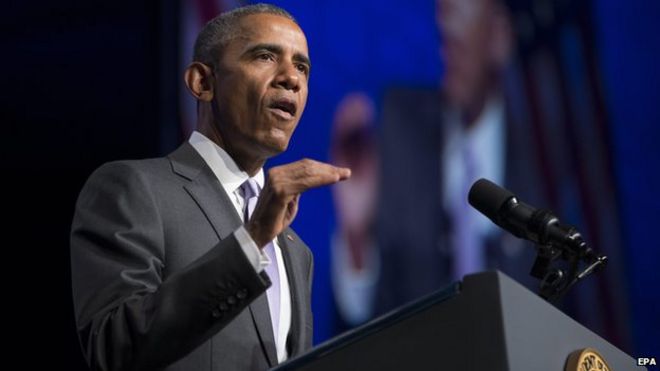
President Obama to boost army trainers in Iraq

The US is to send up to 450 military trainers to Iraq to help "train and advise" local forces fighting Islamic State, the White House says. President Obama
President Obama made the decision following a request from Iraqi Prime Minister Haider Al-Abadi, it said.
The troops will be deployed to the Taqaddum military base in Anbar province. IS seized Ramadi - the capital of Anbar - in May.
It has made gains across the region despite US-led coalition air strikes.
The move is aimed at enabling more Iraqis - mostly Sunni tribal volunteers - to integrate into the Iraq army and fight against Islamic State.
"These new advisers will work to build capacity of Iraqi forces, including local tribal fighters, to improve their ability to plan, lead, and conduct operations" against IS in Anbar, the White House statement added.
Iraq has become increasingly reliant on Shia militias to help government troops in the battle with IS
Islamic State took control of Iraq's second city Mosul a year ago. It has also captured the Syrian town of Tadmur and the neighbouring ancient ruins of Palmyra.
The deployment of military advisers to Taqaddum brings the number of US training camps in Iraq to five.
Some 9,000 Iraqi troops have already been trained at Al-Asad, Besmaya, Erbil, and Taji, the White House said.
President Obama continues to resist demands for combat troops.

'Not enough'

The plan to send more military advisors follows months of behind-the-scenes debate within the White House on how to retake Mosul and Ramadi,The new york times report
US officials believe a major factor in the fall of Ramadi was a lack of training of Iraqi forces.
However, former Iraqi national security adviser, Mowaffak al-Rubaie, told the BBC the move was not enough.
"This is too little too late. I call for the American administration to get their act together." he added.
"They don't have any unified strategy. We don't understand their policy in Iraq and in Syria, in the region. They are giving conflicting signs."
There are currently around 3,000 US military personnel, including trainers and advisers, in Iraq.
The United Kingdom said earlier this week it will send an extra 125 troops, taking the number of UK personnel training Iraqi security forces to 275

Employment opportunity froUS embassy in Tanzania

BASIC FUNCTION OF POSITION

Provide construction and maintenance contract development services for the Facilities Maintenance Division. Oversee contract management and provide technical engineering support for the Mission. The project specifications and technical advice encompass electrical, mechanical, and civil/structural engineering requirements. Project oversight includes planning, cost estimation, design, construction, inspection, and reception of works. Support provided is for US facilities operations in Dar es Salaam Position reports to the Facility Manager.


MAJOR DUTIES AND RESPONSIBILITIES:
Engineering and Contract Management:
60% of time


Incumbent processes queries for technical and administrative requirements of renovation and alteration projects as well as requests for changes to existing structures. Incumbent researches and prepares feasibility studies to ascertain technical and legal constraints in accordance with local building codes and requirements of the Overseas Buildings Operations (OBO) in Washington in order to delineate viability of proposals.

Incumbent prepares engineering scopes of works, plans, designs, drawings, specifications, bills of materials and independent cost estimates for construction, alterations, and maintenance/repair projects for Government facilities and equipment. Job entails editing and reviewing technical reports, tender documents, drawings, specifications and cost estimates developed by contracted Architect and Engineering (A&E) firms. Position ensures that local codes and the Department of State’s safety and technical standards are strictly adhered to.

Maintenance and Construction:
30%


As one of the Mission’s technically responsible engineering experts, position supplies technical guidance and support for all major maintenance and construction projects in Dar es Salaam. Provision of guidance and technical advice to other maintenance supervisors and project managers as required is a team requirement. Incumbent assists the Maintenance Manager and the Facilities Manager with all technical projects and purchases of equipment and machinery by providing pertinent recommendations, reports, and data.

Other Duties:
10%


Position will perform other duties as required.


QUALIFICATIONS REQUIRED

All applicants must address each selection criterion detailed below with specific and comprehensive information supporting each item.
  1. Education: Graduate engineer with B.S. degree in civil, mechanical, electrical, or related engineering field is required.

  2. Prior Work Experience: Five years prior work experience in an engineering firm performing design and construction services is required.

  3. Language proficiency: Level IV (Fluent) in English and Kiswahili (speaking, writing and reading) with proficiency in the specialized vocabulary required by the duty of the position.

  4. Knowledge: Must be familiar with - US and IBC (International) building codes and requirements; understanding of design, construction, and maintenance procedures; common safety protocols including the Embassy SHEM program; and related tools and building materials Professional knowledge of electrical, mechanical, orcivil engineering concepts, principles, and practices applicable to a full range of duties concerned with the design, layout, and construction of facilities is required.

  5. Skills and Abilities: Must be fluent in using Microsoft Office, and project management software. Ability to read and understand engineering and architectural plans and building schematics. Ability to handle multi-tasking and complicated projects. Proficent with AutoCAD software. Registered as a professional engineer and pay required fee. Driving license is also required.

SELECTION PROCESS

When fully qualified, US Citizen Eligible Family Members (USEFMs) and US Veterans are given preference. Therefore, it is essential that the candidate specifically address the required qualifications above in the application.

ADDITIONAL SELECTION CRITERIA
  1. Management will consider nepotism/conflict of interest, budget, and residency status in determining successful candidacy.
TO APPLY

Interested candidates for this position must submit the following for consideration of the application:
  1. Universal Application for Employment as a Locally Employed Staff or Family Member (DS-174). A hard copy of the application form (DS-174) is also available at the American Embassy, gate 3; or

  2. A combination of both; i.e. Sections 1 -24 of the UAE along with a listing of the applicant’s work experience attached as a separate sheet; or

  3. A current resume or curriculum vitae that provides the same information found on the UAE (see section 3A below for more information); plus

  4. Candidates who claim US Veterans preference must provide a copy of their Form DD-214 with their application. Candidates who claim conditional US Veterans preference must submit documentation confirming eligibility for a conditional preference in hiring with their application.

  5. Any other documentation (e.g., essays, certificates, awards) that addresses the qualification requirements of the position as listed above.

3A. If an applicant is submitting a resume or curriculum vitae, s/he must provide the following information equal to what is found on the UAE.

Failure to do so will result in an incomplete application.
    A. Position Title
    B. Position Grade
    C. Vacancy Announcement Number (if known)
    D. Dates Available for Work
    E. First, Middle, & Last Names as well as any other names used
    F. Date and Place of Birth
    G. Current Address, Day, Evening, and Cell phone numbers
    H. U.S. Citizenship Status (Yes or No) & status of permanent U.S. Resident (Yes or No; if yes, provide number)
    I. U.S. Social Security Number and/or Identification Number
    J. Eligibility to work in the country (Yes or No)
    K. Special Accommodations the Mission needs to provide
    L. If applying for position that includes driving a U.S. Government vehicle, Driver’s License Class / Type
    M. Days available to work
    N. List any relatives or members of your household that work for the U.S. Government (include their Name, Relationship, & Agency, Position, Location)
    O. U.S. Eligible Family Member and Veterans Hiring Preference
    P. Education
    Q. License, Skills, Training, Membership, & Recognition
    R. Language Skills
    S. Work Experience
    T. References
SUBMIT APPLICATION TO

American Embassy
Human Resources Office
P.O. Box 9123
Dar es Salaam

POINT OF CONTACT

Telephone: (255-22)229 4000, Ext: 4137/4148/4233/4024
Fax: (255-22)229 4726

CLOSING DATE OF THE POSITION: June 18, 2015

Saturday, 6 June 2015

HOW TO GET BUSSINES IDEAS

Many people believe starting a business is a mysterious process. They know they want to start a business, but they don't know the first steps to take. In this chapter, you're going to find out how to get an idea for a business--how you figure out exactly what it is you want to do and then how to take action on it.
But before we get started, let's clear up one point: People always wonder if this is a good time to start their business idea. The fact is, there's really never a bad time to launch a business. It's obvious why it's smart to launch in strong economic times. People have money and are looking for ways to spend it. But launching in tough or uncertain economic times can be just as smart. If you do your homework, presumably there's a need for the business you're starting. Because many people are reluctant to launch in tough times, your new business has a better chance of getting noticed. And, depending on your idea, in a down economy there is often equipment (or even entire businesses!) for sale at bargain prices.
Estimates vary, but generally more than 600,000 businesses are started each year in the United States. Yet for every American who actually starts a business, there are likely millions more who begin each year saying "OK, this is the year I am going to start a business," and then don't.
Everyone has his or her own roadblock, something that prevents them from taking that crucial first step. Most people are afraid to start; they may fear the unknown or failure, or even success. Others find starting something overwhelming in the mistaken belief they have to start from scratch. They think they have to come up with something that no one has ever done before--a new invention, a unique service. In other words, they think they have to reinvent the wheel.
But unless you're a technological genius--another Bill Gates or Steve Jobs--trying to reinvent the wheel is a big waste of time. For most people starting a business, the issue should not be coming up with something so unique that no one has ever heard of it but instead answering the questions: "How can I improve on this?" or "Can I do this better or differently from the other guy doing it over there?" Or simply, "Is there market share not being served that makes room for another business in this category?"

Get the Juices Flowing

How do you start the idea process? First, take out a sheet of paper and across the top write "Things About Me." List five to seven things about yourself--things you like to do or that you're really good at, personal things (we'll get to your work life in a minute). Your list might include: "I'm really good with people, I love kids, I love to read, I love computers, I love numbers, I'm good at coming up with marketing concepts, I'm a problem solver." Just write down whatever comes to your mind; it doesn't need to make sense. Once you have your list, number the items down one side of the paper.
On the other side of the paper, list things that you don't think you're good at or you don't like to do. Maybe you're really good at marketing concepts, but you don't like to meet people or you're really not that fond of kids or you don't like to do public speaking or you don't want to travel. Don't overthink it; just write down your thoughts. When you're finished, ask yourself: "If there were three to five products or services that would make my personal life better, what would they be?" This is your personal life as a man, woman, father, husband, mother, wife, parent, grandparent--whatever your situation may be. Determine what products or services would make your life easier or happier, make you more productive or efficient, or simply give you more time.
Next, ask yourself the same question about your business life. Examine what you like and dislike about your work life as well as what traits people like and dislike about you. Finally, ask yourself why you're seeking to start a business in the first place. Then, when you're done, look for a pattern to emerge (i.e., whether there's a need for a business doing one of the things you like or are good at).

They Delivered

Here's a business startup story that's a great example of seeing a need and filling it. Entrepreneur magazine is located in Irvine, California, a planned community. Many years ago, there weren't many fast-food restaurants in the business area. Most were across town, where the neighborhoods were. Two young men in Irvine found this lunch situation very frustrating. There weren't many affordable choices. Sure, there were some food courts located in strip centers, but the parking lots were really small and the wait was horrendous.
One day, as they were lamenting their lunch problem, one of them said, "Wouldn't it be great if we could get some good food delivered?" The proverbial light bulb went on! Then they did what many people don't do--they did something about their idea. Coincidentally, they purchased one of Entrepreneur's business startup guides and started a restaurant delivery business.
To date, their business has served more than 15 million people! It's neither a complicated business nor an original one. Their competition has gotten stiffer, and yet they're doing phenomenally well. And it all began because they listened to their own frustrations and decided to do something about them. Little did they know that research cites the shrinking lunch hour as one of the biggest complaints by American workers. Some only get 30 minutes, making it nearly impossible to get out, get lunch and get back on time. So while these young entrepreneurs initially thought they were responding to a personal need in their local area, they actually struck a universal chord.
That is one way to get ideas--listening to your own (or your co-workers', family's or neighbors') frustrations. The opportunities are all there; you just need to search them out. If your brain is always set in idea mode, then many ideas may come from just looking around or reading. For instance, if you had read an article about the shrinking lunch hour, and if you were thinking entrepreneurially, you would say "Wow, maybe there's an opportunity there for me to do something. I should start researching it."

Inspiring Moments

Inspiration can be anywhere. Here's another classic startup story: Ever get charged a fee for returning a video late? Bet you didn't do anything about it. Well, when Reed Hastings got a whopping $40 late charge, instead of getting mad, he got inspired. Hastings wondered "How come movie rentals don't work like a health club, where, whether you use it a lot or a little, you get charged the same?" From this thought, Netflix.com, an online DVD rental service, was born. From its start in 1999, Netflix has grown into a big business with revenues topping $1.3 billion.
Getting an idea can be as simple as keeping your eyes peeled for the latest hot businesses; they crop up all the time. Many local entrepreneurs made tons of money bringing the Starbucks coffeehouse concept to their hometowns and then expanding from there. Take Minneapolis-based Caribou Coffee. The founders had what they describe as an "aha moment" in 1990, and two years later launched what is now the nation's second-largest company-owned gourmet coffeehouse chain. Other coffee entrepreneurs have chosen to stay local.
And don't overlook the tried and true. Hot businesses often go through cycles. Take gardening. For the last few years gardening products and supplies have been all the rage, but you wouldn't consider gardening a 21st century business.
In other words, you can take any idea and customize it to the times and your community. Add your own creativity to any concept. In fact, customizing a concept isn't a choice; it's a necessity if you want your business to be successful. You can't just take an idea, plop it down and say "OK, this is it." Outside of a McDonald's, Subway or other major franchise concept, there are very few businesses that work with a one-size-fits-all approach.
One of the best ways to determine whether your idea will succeed in your community is to talk to people you know. If it's a business idea, talk to co-workers and colleagues. Run personal ideas by your family or neighbors. Don't be afraid of people stealing your idea. It's just not likely. Just discuss the general concept; you don't need to spill all the details.

Just Do It!

Hopefully by now, the process of determining what business is right for you has at least been somewhat demystified. Understand that business startup isn't rocket science. No, it isn't easy to begin a business, but it's not as complicated or as scary as many people think, either. It's a step-by-step, common-sense procedure. So take it a step at a time. First step: Figure out what you want to do. Once you have the idea, talk to people to find out what they think. Ask "Would you buy and/or use this, and how much would you pay?"
Understand that many people around you won't encourage you (some will even discourage you) to pursue your entrepreneurial journey. Some will tell you they have your best interests at heart; they just want you to see the reality of the situation. Some will envy your courage; others will resent you for having the guts to actually do something. You can't allow these naysayers to dissuade you, to stop your journey before it even begins.
In fact, once you get an idea for a business, what's the most important trait you need as an entrepreneur? Perseverance. When you set out to launch your business, you'll be told "no" more times than you've ever been told before. You can't take it personally; you've got to get beyond the "no" and move on to the next person--because eventually, you're going to get to a "yes."
One of the most common warnings you'll hear is about the risk. Everyone will tell you it's risky to start your own business. Sure, starting a business is risky, but what in life isn't? Plus, there's a difference between foolish risks and calculated ones. If you carefully consider what you're doing, get help when you need it, and never stop asking questions, you can mitigate your risk.
You can't allow the specter of risk to stop you from going forward. Ask yourself "What am I really risking?" And assess the risk. What are you giving up? What will you lose if things don't work out? Don't risk what you can't afford. Don't risk your home, your family or your health. Ask yourself "If this doesn't work, will I be worse off than I am now?" If all you have to lose is some time, energy and money, then the risk is likely worth it.
Determining what you want to do is only the first step. You've still got a lot of homework to do, a lot of research in front of you. Buying this book is a smart first step. Most important: Do something. Don't sit back year after year and say "This is the year I'm going to start my business." Make this the year you really do it!
This article is an edited excerpt from "Start Your Own Business, Fifth Edition", published by Entrepreneur Press